
Ambient Tea Tasting
From: £15.00
Tea produces a huge variety of floral, fruity, vegetal and woody flavours making it the most complex non-alcoholic drink and perfect for pairing with food. However, in Asia where tea originates and tea culture permeates everything, everyday inexpensive teas are often drunk with street foods like sushi and dim sum, but fine tea traditionally has not been drunk at mealtimes. In one memorable scene from China’s most celebrated novel “Dream of the Red Chamber” the country heroine Dai Yu has dinner with the sophisticated Jia family for the first time and after the meal, commits the faux pas of drinking a lower quality tea meant for just rinsing out one’s mouth because she didn’t know the better tea for drinking would be served later.
In the West, with the exception of afternoon tea or high tea, hot drinks are not usually served through a meal, but only offered at the end of a meal when both tea and coffee are seen as good digestives with a pleasant astringency to counteract the sweetness of the dessert course. The drinks we enjoy during a fine meal are almost always served slightly chilled or at room temperature and in glasses, not ceramics.
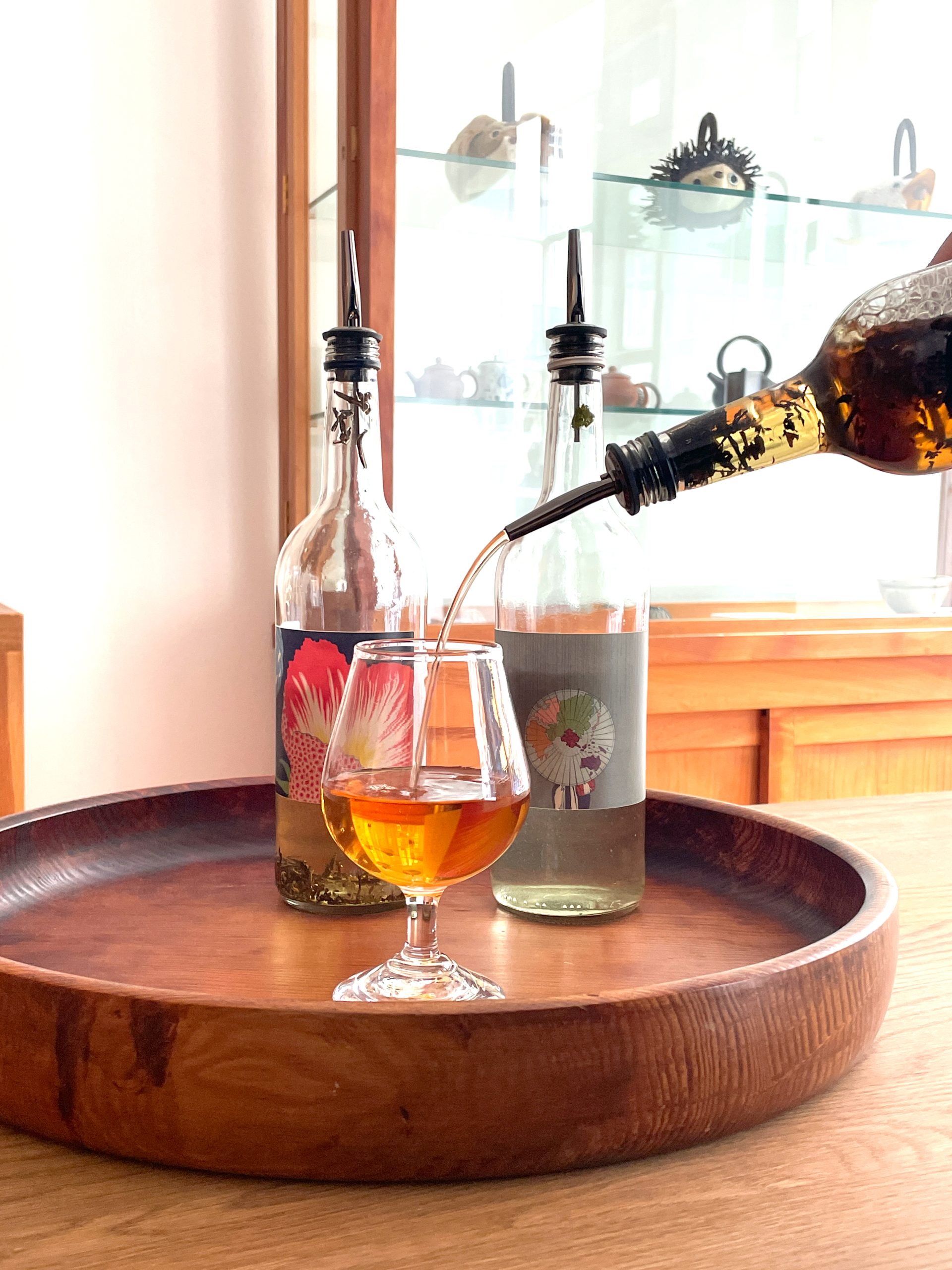
Ambient tea brewing is done with a mineral or spring water for usually under an hour at ambient temperatures between 10°C and 20°C, and then stored and served within those temperatures. Ambient brewing offers a happy medium: it quickly yields a brewed tea that has more flavour, body, structure, and aroma than cold-brewed tea, while avoiding the astringency that hot brewing processes can create. Traditionally different regions’ tea cultures have created very different ways of brewing tea hot, ambient tea’s simple brewing method creates an easy way to enjoy teas from many countries and cultures.
Ambient tea feels appropriate for service with fine food as it can be poured from a bottle with information about the tea at a temperature that creates no condensation and is pleasant to hold in your hands as you admire the tea’s colour. As the ambient tea warms up just like a wine, the aromas and structure will change, but the changes are subtle compared to the dramatic and undesirable changes with hot and chilled cold brew tea’s flavours, making ambient tea a much more reliable partner for pairing with food.
Since we debuted ambient tea at the RAW Natural Wine Festival in 2016, it has been adopted by some of the top restaurants in the UK like The Clove Club, L’Enclume and Da Terra and we have even taken ambient tea to Michelin starred restaurants in Asia.
These are some of the pairings that have worked best at these restaurants. Gyokuro, a Japanese shaded green tea, pairs wonderfully with both cooked and raw fish, as well as a variety of vegetables. Oriental Beauty, a darker oolong, is well suited to shellfish, crustaceans, as well as dark green vegetables including asparagus. First Flush Darjeeling works well with fish, white meats, and salads. As well as being ambient brewed in still water, First Flush and lightly oxidised Taiwanese Oolongs can also be easily ambient brewed in sparkling water for a refreshing non-alcoholic aperitif. Roasted black teas are unusual and not widely available, but they pair very well with pork, smoked and oily fish as well as chocolate desserts. A decent Shu Puerh is robust enough to work with many pork and beef dishes.
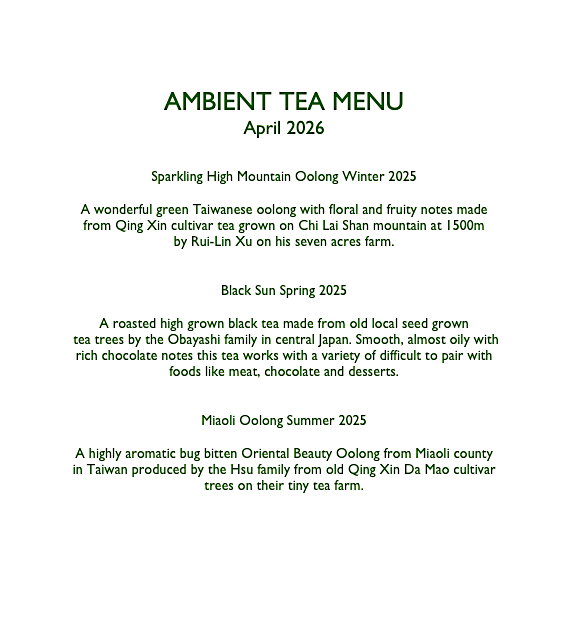
At the Ambient Tea experience we will show you how to make ambient tea, taste 3 ambient teas including one sparkling tea and answer any questions you have about how to enjoy ambient tea. We will also pair each tea with a simple snack.
The tasting lasts for approximately 45 minutes.